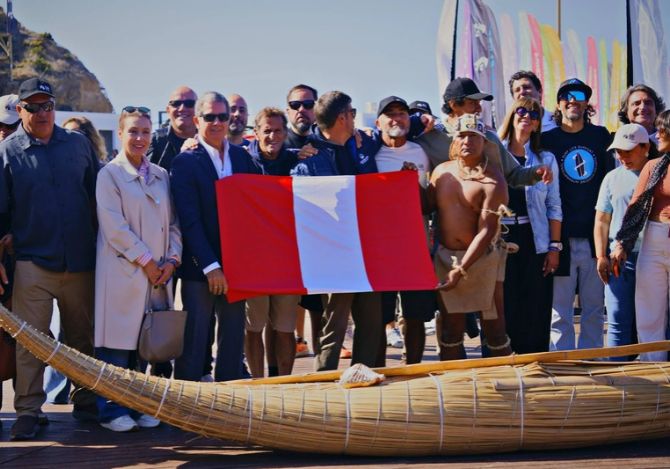
Cabo Blanco, a legendary sport fishing and surfing destination on Peru’s northern coast, has been recognized as the world’s first carbon-neutral surf destination during the 15th anniversary celebration of the World Surf Cities Network in Ericeira, Portugal. Cabo Blanco is a member of this international network, which brings together destinations committed to sustainable development and the promotion of surfing.
This milestone is the result of a public-private initiative launched in 2022 by the District Municipality of El Alto and Inkaterra, a pioneer of regenerative tourism in Peru since 1975. The project seeks to restore Cabo Blanco’s international prestige through a sustainable development model that integrates biodiversity conservation, scientific research, circular economy practices, and community well-being.
With technical assistance from Green Initiative and support from CANATUR, AECID, the European Union, and Olas Perú, Cabo Blanco has implemented initiatives focused on climate management, sustainable wastewater treatment, plastic waste recovery, and community training. In 2026, the destination became a signatory to the Glasgow Declaration on Climate Action in Tourism and completed its first carbon-neutral certification cycle.
“Cabo Blanco represents an extraordinary opportunity to demonstrate how tourism can contribute to ecosystem regeneration and the restoration of a destination’s heritage. Our vision is to restore its international prestige as a historic sport fishing and surfing destination, integrating scientific research, conservation of the Tropical Pacific, and sustainable development for local communities,” said Liza Masias, Marketing Director at Inkaterra, who attended the ceremony.
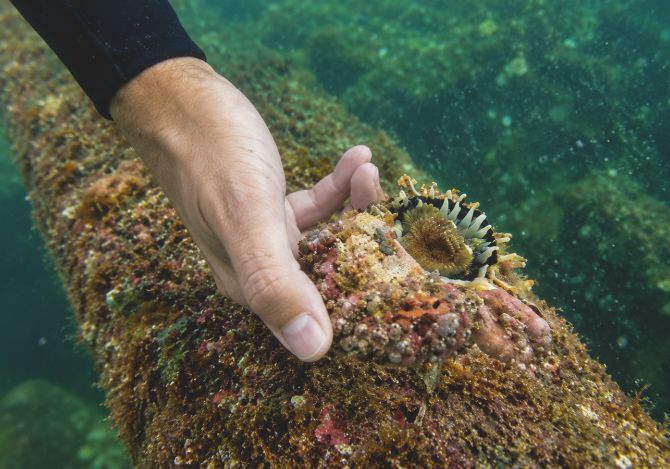
This vision is taking shape through the development of Inkaterra Cabo Blanco, the hotel group’s eighth property and its first on the Peruvian coast, alongside research and conservation projects focused on marine and coastal ecosystems, reef restoration, sustainable aquaculture, and dry forest protection.
Inkaterra is also promoting the restoration of Cabo Blanco’s historical heritage, a destination associated with major milestones in international sport fishing, including the capture of a 1,560-pound black marlin in 1953 and the visit of writer Ernest Hemingway in 1956. Efforts to preserve and celebrate this legacy, including the historic Miss Texas fishing vessel, aim to restore Cabo Blanco’s identity as an iconic Pacific destination.
With this recognition and its membership in the World Surf Cities Network, Cabo Blanco continues to establish itself as an international benchmark for regenerative tourism, demonstrating how public-private collaboration can advance climate action, biodiversity conservation, and sustainable development in Peru’s Tropical Pacific region.