JOSÉ KOECHLIN HONORED
WITH LIFETIME ACHIEVEMENT RECOGNITION
AT SAHIC 2026

Inkaterra is proud to announce that its Founder and Chairman, José Koechlin von Stein, has been awarded the Lifetime Achievement Recognition at the 20th edition of SAHIC (South American Hotel & Tourism Investment Conference), held on March 23–24, 2026 at the Fairmont in Rio de Janeiro, Brazil.

Granted by SAHIC's Executive Committee, this distinction honors individuals whose careers have made an exceptional and lasting contribution to the development of the hospitality industry in Latin America and the Caribbean. The recognition celebrates José Koechlin's five-decade trajectory defined by vision, leadership, and an unwavering commitment to redefining tourism as a force for conservation and sustainable development.

Distinguished with five Michelin Keys in 2025, recipient of Travel + Leisure magazine's 2020 Global Vision Award, and acknowledged by the United Nations as the world's first Climate Positive hotel brand, Inkaterra stands as a benchmark for regenerative tourism.

Since founding Inkaterra in 1975, Koechlin has pioneered a holistic model of eco-luxury hospitality—integrating scientific research, biodiversity conservation, community wellbeing, and experiential travel long before sustainability became a global imperative. Today, Inkaterra’s portfolio spans key regions of Peru, from the Amazon rainforest and the Andean cloud forest to the Sacred Valley of the Incas, the city of Cusco, and the Tropical Pacific coastline.

Beyond his entrepreneurial work, Koechlin serves as Chairman of the National Chamber of Tourism of Peru (CANATUR) and is an emeritus board member of Conservation International. His international distinctions include the PURE Award for Contribution to Experiential Travel (2015) and multiple recognitions from SAHIC, including Best Developer Awards in 2010 and 2013.

During the ceremony, a special tribute was held in memory of Denise Guislain Koechlin, whose artistic vision and sensitivity shaped Inkaterra’s distinctive identity. Her legacy—expressed through architecture, design, and a profound sense of place—remains deeply embedded in the brand’s philosophy, where hospitality is conceived as an experience of harmony with nature.

As Arturo García Rosa, President & CEO of SAHIC, noted: “José Koechlin’s legacy transcends hospitality. He has demonstrated that investment, conservation, and community impact can coexist within a single, transformative vision.”

BRITISH AMBASSADOR VISITS INKATERRA
TO EXPLORE THE MADRE DE DIOS
SUSTAINABLE LANDSCAPE INITIATIVE

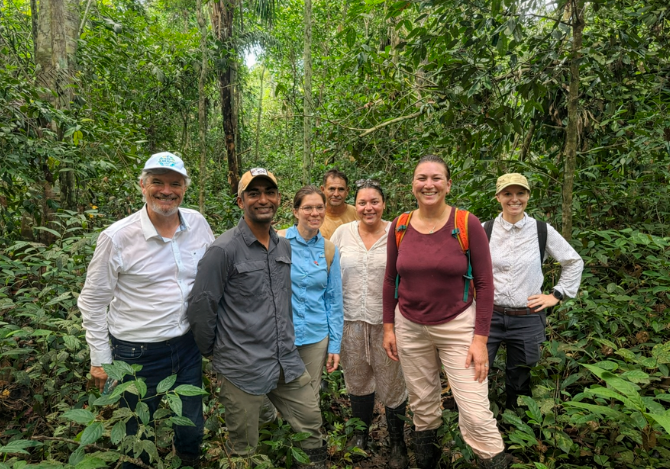
The British Ambassador to Peru, Su-Lin Garbett-Shiels, visited the Madre de Dios region to gain first-hand insight into how integrated models of ecotourism, scientific research, and bioeconomy can become scalable solutions for conservation and nature-positive economic development.

Hosted by Inkaterra, the visit showcased an innovative approach in which tourism finances science, science enables sustainable bio-businesses, and these, in turn, attract private investment—creating tangible incentives to protect forests while strengthening local economies.

At the center of the visit was the Madre de Dios Sustainable Landscape Corridor (MDSL), led by Inkaterra Asociación, a large-scale initiative designed to position the region as a hub for green investment, biodiversity conservation, and sustainable development.

According to a recent LinkedIn publication by the UK Embassy in Peru, the visit highlighted key opportunities to:

  • Scale sustainable value chains—such as aguaje, Brazil nuts, copoazú, vanilla, and native cacao—through value addition, traceability, and applied science.
  • Advance research and development opportunities for pharmaceutical, cosmetic, and biotechnology companies interested in Amazonian natural inputs.
  • Mobilize landscape finance by combining private capital, impact investment, and catalytic funding to unlock investment opportunities.
  • Strengthen sustainable economic alternatives that reduce pressure from illegal activities in highly biodiverse regions.
  • Connect science, business, and territory by reinforcing research infrastructure and aligning with international market standards.

This exchange also builds upon the ongoing Business Dialogue on the Cali Fund, opening space for voluntary collaboration with the private sector and helping move from ambition to implementation.

The visit further underscored the importance of science-led conservation. Through its research platforms in Madre de Dios, Inkaterra Asociación advances biodiversity studies, including genetic sequencing and applied research to address ecosystem degradation and restore ecological connectivity across landscapes.

By integrating ecotourism, science, and investment, the Madre de Dios Sustainable Landscape Corridor represents a forward-looking model—one that transforms the Amazon into a platform for innovation, resilience, and sustainable economic opportunity. This groundbreaking initiative advances reforestation, ecotourism, and other nature-based activities across a landscape that is being consolidated as a conservation corridor.

Conceived as a hub for green business and investment, it enables local communities and stakeholders to engage in value-added economic activities that sustain biodiversity, reduce ecosystem fragmentation, and restore critical ecosystem services. In doing so, it contributes to poverty reduction, strengthens carbon sequestration capacity, fosters resilient natural habitats, and promotes the sustainable use of food, water, and other natural resources—while building local capacities in ecotourism and cultural initiatives for long-term, inclusive development.

"A HUMBOLDT OF OUR TIME AND SPACE":
JOSÉ KOECHLIN FEATURED IN EY'S NEW BOOK
VISIONARIOS

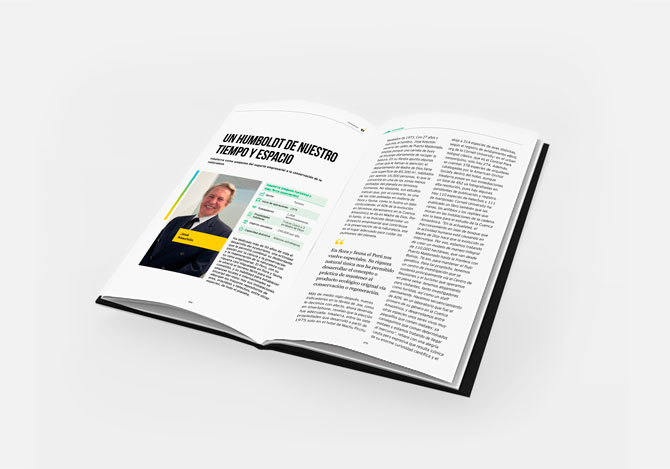
Inkaterra Founder and Chairman José Koechlin is featured in Visionarios, a new publication by EY that highlights transformative leaders shaping industries and redefining the role of business in Peruvian society.

In a chapter titled “A Humboldt of Our Time and Place”, Koechlin is portrayed as a pioneering figure who has devoted more than five decades to developing ecotourism as a bridge between science, conservation, and enterprise. The story traces his early journeys through Madre de Dios in the 1970s—where he first recognized the extraordinary paradox of a region sparsely populated by humans yet overwhelmingly rich in biodiversity—and how this insight became the foundation for Inkaterra’s long-term vision: to regenerate and conserve ecosystems through a sustainable business model.

Nowadays, this vision is reflected in one of the most ambitious biodiversity platforms in hospitality. Inkaterra’s properties serve as living laboratories, hosting some of the world’s most significant biodiversity hotspots. This approach is exemplified in Machu Picchu, where formerly degraded land has been restored into a thriving cloud forest ecosystem where 315 bird species are registered by eBird (Cornell Lab of Ornithology), as well as 372 native orchid species, the world’s largest collection in its natural habitat according to the American Orchid Society.

The book underscores Koechlin’s distinctive approach: a holistic model where conservation and regeneration are not complementary efforts, but the core of Inkaterra itself. From protecting pristine habitats in the Amazon to restoring degraded landscapes in the Andes and advancing coastal ecosystems on the Tropical Pacific, his work demonstrates that tourism can actively enhance the natural environments on which it depends.

Characterized by the authors as a contemporary Alexander von Humboldt, José Koechlin embodies a rare combination of scientific curiosity, entrepreneurial vision, and long-term thinking. EY’s book also highlights his ability to build complex alliances—bridging public and private sectors, science and hospitality—to enhance conservation goals in challenging contexts. This capacity has been instrumental in shaping Inkaterra’s impact over time.

TRAVEL WEEKLY HIGHLIGHTS INKATERRA CABO BLANCO
AS A NEW BENCHMARK FOR ECO-LUXURY
ON PERU'S PACIFIC COAST

In a recent feature, Travel Weekly spotlighted Inkaterra Cabo Blanco as one of the most compelling new eco-luxury openings in Latin America, marking Inkaterra’s arrival at Peru’s Tropical Pacific coast with a concept that blends barefoot luxury, conservation, and destination regeneration.

The property, an intimate oceanfront retreat, features 13 spacious suites overlooking the Pacific, each designed with private terraces and plunge pools that open seamlessly to the horizon. Conceived for travelers seeking immersion in nature without compromising comfort, the experience is complemented by ocean-inspired wellness therapies, coastal gastronomy, and curated experiences such as sailing aboard the restored Miss Texas, retracing the journeys of Nobel Prize-winning author Ernest Hemingway.

Beyond the property itself, the article emphasizes Cabo Blanco’s unique setting—where the desert meets the sea, shaped by the convergence of the Humboldt, El Niño, and Cromwell currents, which concentrate nearly 70% of Peru’s marine biodiversity. Once a global icon of sport fishing, the destination is now entering what José Koechlin describes as a “profound renaissance,” positioning itself as a hub for nature-driven travel and exploration.

Central to this transformation is Inkaterra's long-term vision for Cabo Blanco, which extends far beyond hospitality. The project integrates marine conservation, scientific research, and community engagement, including the management of a 104-hectare private marine reserve with initiatives that support sustainable aquaculture and local livelihoods. Efforts also include the restoration of Cabo Blanco's historic boardwalk, reconnecting the destination with its cultural legacy while shaping a new identity rooted in sustainability.

Central to this transformation is Inkaterra’s long-term vision for Cabo Blanco, which extends far beyond hospitality. The project integrates marine conservation, scientific research, and community engagement, including the management of a 104-hectare private marine reserve with initiatives that support sustainable aquaculture and local livelihoods. Efforts also include the restoration of Cabo Blanco’s historic boardwalk, reconnecting the destination with its cultural legacy while shaping a new identity rooted in sustainability.

This approach reflects Inkaterra’s broader trajectory as a pioneer of ecotourism since its founding in 1975. Internationally recognized—including five Michelin Keys—Inkaterra continues to position hospitality as a platform for regenerative development. As highlighted by Travel Weekly, Inkaterra Cabo Blanco is not simply a new hotel—but a meaningful step in the revival of an iconic destination.

@Inkaterrahotels

inkaterra.com