NEW BIRD-SIGHTING RECORD CONFIRMS
INKATERRA MACHU PICCHU PUEBLO HOTEL
AS A WORLD BIODIVERSITY HOTSPOT

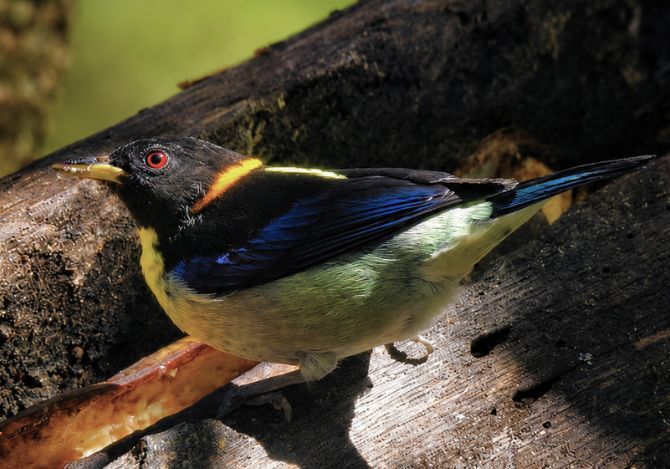
The Andean cloud forest at Inkaterra Machu Picchu Pueblo Hotel has yielded the first documented record of the Golden-collared Honeycreeper (Iridophanes pulcherrimus). This remarkable discovery not only represents the first recorded observation of this species at Machu Picchu, but also raises the property's bird list to 317 species registered through the Cornell Lab of Ornithology's eBird platform.

The finding reinforces the value of five decades of ecological restoration led by Inkaterra, a pioneer of regenerative tourism in Peru. What was once degraded land has been transformed into one of the world's leading biodiversity hotspots within an urban setting, where conservation, scientific research, and responsible tourism come together to foster the return of wildlife.

The Golden-collared Honeycreeper is among the most striking birds of the Andean forests. First described scientifically in 1853 by the English zoologist Philip Lutley Sclater, it is the sole member of the genus Iridophanes, whose name means "one that displays a rainbow," referring to its brilliant iridescent plumage. The species inhabits cloud forests from southern Colombia and Ecuador to southeastern Peru, between approximately 730 and 2,530 meters above sea level, undertaking seasonal altitudinal movements in search of flowering and fruiting plants that provide nectar and fruit.

Its presence in Machu Picchu is particularly significant. After more than four decades of continuous ornithological monitoring, this is the first documented record of the species within the protected area. Specialists suggest that the observation may be associated with natural altitudinal movements, shifts in food availability, or even a recent local range expansion.

The recovery of the cloud forest through the restoration of native vegetation has increased the availability of food resources for nectar - and fruit - feeding birds such as the Golden-collared Honeycreeper. This demonstrates how habitat regeneration can translate into tangible benefits for biodiversity.

With this new sighting, Inkaterra Machu Picchu Pueblo Hotel further strengthens its position as one of the world's most bird-diverse sites within an urban environment. Every new species recorded represents not only an advance for science, but also compelling evidence that regenerative tourism can restore ecosystems and create the conditions for nature to flourish.

MACHU PICCHU AND THE GOLDEN EMPIRES OF PERU
TO PREMIERE AT THE SHANGHAI MUSEUM

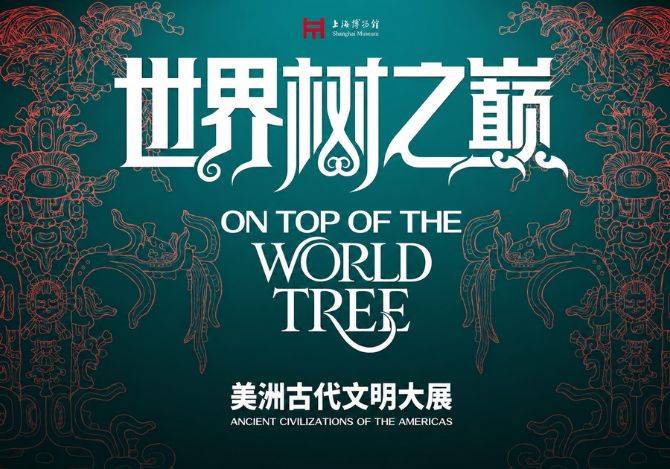
On July 8, the Shanghai Museum will inaugurate On Top of the World Tree: Ancient Civilizations of the Americas, the largest exhibition ever presented in China dedicated to the ancient civilizations of the Americas. As part of this landmark international exhibition, Machu Picchu and the Golden Empires of Peru (sponsored by Inkaterra) will anchor the Peru section, becoming the most comprehensive exhibition on Andean civilizations ever presented in the country.

Open through November 14, 2027, the exhibition brings together 1,129 archaeological groups comprising nearly 3,000 objects from museums and cultural institutions in Peru and Mexico. Spanning more than 7,000 square meters at the Shanghai Museum, it offers visitors an immersive journey through the artistic, political, and spiritual development of pre-Columbian civilizations while exploring the enduring legacy of the ancient Americas.

The Machu Picchu and the Golden Empires of Peru section showcases extraordinary treasures from Lima's Larco Museum, including masterful gold and silver works, ceremonial jewelry, and royal funerary offerings from ancient Andean civilizations. Through a journey spanning more than 3,000 years, the exhibition reveals the artistic, technological, and spiritual sophistication of the cultures that flourished in the Andes long before the Inca Empire.

Following acclaimed presentations in Florida, Paris, Milan, Sydney, and most recently Tokyo, the exhibition continues introducing Peru's cultural heritage to new international audiences. In Shanghai, visitors will experience a museographic concept inspired by the symbolic World Tree, where maize, jaguars, feathered serpents, and the sacred landscapes of the ancient Americas accompany them throughout the exhibition.

Produced by Neon Global, Machu Picchu and the Golden Empires of Peru is presented with Inkaterra Asociación as Exhibition Partner. For more than five decades, Inkaterra has promoted initiatives that integrate scientific research, conservation, and regenerative tourism, helping millions of visitors understand the profound relationship between the extraordinary biodiversity of the historic sanctuary of Machu Picchu and the legacy of Andean civilizations. Today, the exhibition further reinforces Inkaterra Asociación's commitment to promoting Peru's natural and cultural heritage worldwide.

Inkaterra Asociación's participation in this landmark exhibition strengthens the cultural ties between Peru and China while positioning Machu Picchu not only as one of humanity's greatest achievements, but also as a living landscape where nature and culture continue to coexist and inspire future generations.

INKA TERRA ASOCIACIÓN ‘S BIOLOGIST
IS NAMED NATIONAL GEOGRAPHIC EXPLORER

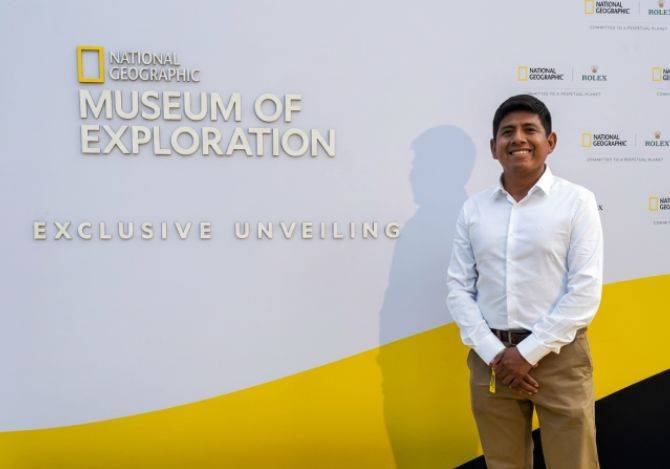
Inkaterra Asociación's resident biologist, Daxs H. Coayla Rimachi, was invited to be part of the National Geographic Explorers Festival 2026 in Washington, D.C., one of the world's premier scientific gatherings, where researchers, conservationists, and storytellers supported by the National Geographic Society come together each year to share the latest advances in exploration, science, and conservation.

Recognized as a National Geographic Explorer, Daxs represents a new generation of Peruvian scientists dedicated to the study and protection of Amazonian ecosystems. His research has focused on ecohydrology and biodiversity conservation in the southern Peruvian Amazon, investigating water dynamics in Andean-Amazonian watersheds through isotopic analysis to better understand the hydrological processes that regulate water availability and circulation.

Daxs currently holds a National Geographic grant to lead the project "Water Sources Used by Trees for the Development of Hydrological Functions in the Rainforests of the Amazon Region of Madre de Dios, Peru." The research examines the water sources used by trees in both intact Amazonian forests and areas impacted by deforestation caused by gold mining. His findings contribute to a better understanding of how climate-change impacts on tropical forest functioning while providing valuable knowledge for the sustainable management of water resources.

Throughout his career, Daxs has also participated in botanical research that contributed to the discovery of a new orchid species for science in Machu Picchu, further demonstrating the value of interdisciplinary research in expanding our understanding of Peru's extraordinary biodiversity.

INKATERRA ASOCIACIÓN SUPPORTS DOCUMENTARY ANIMATION WORKSHOP FOR YOUTH IN MACHU PICCHU

As part of its commitment to education, culture, and community development, Inkaterra Asociación partnered with the Lima Docs International Documentary Film Festival to make possible the free documentary animation workshop "Animation Between Worlds," designed for teenagers from Machu Picchu Pueblo.

Led by Ukrainian filmmaker Polina Piddubna, director of the animated documentary My Grandmother Is a Skydiver, the workshop introduced participants to documentary animation as a creative medium for exploring identity, memory, and personal storytelling through visual experimentation.

Throughout the sessions, participants learned collage animation techniques and created their own documentary narratives, discovering new ways to tell the stories of their lives and their community through film. The initiative encouraged creativity, artistic expression, and the development of authentic narratives from the perspective of Machu Picchu's younger generation.

The collaboration reflects Inkaterra's longstanding relationship with cinema as a means of promoting Peru's natural and cultural heritage. Inkaterra founder José Koechlin co-produced Werner Herzog's films Aguirre, the Wrath of God (1972) and Fitzcarraldo (1982), as well as Les Blank's acclaimed documentary Burden of Dreams (1982), productions that helped introduce Peru's extraordinary landscapes to international audiences.

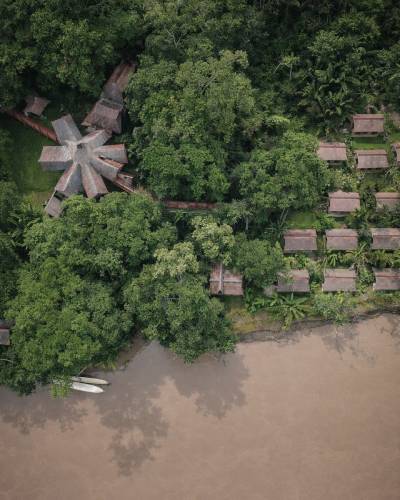
That commitment continues today. In recent years, the Amazon Field Station by Inkaterra in Madre de Dios has hosted filmmaking workshops led by legendary director Werner Herzog and acclaimed Thai filmmaker Apichatpong Weerasethakul, recipient of the Palme d'Or at the Cannes Film Festival, reinforcing Inkaterra's role in providing spaces where conservation, science, and the arts come together to inspire new generations.

@Inkaterrahotels

inkaterra.com