Condé Nast Traveler has published an
in-depth feature on Inkaterra Cabo Blanco,
written by Senior Features Editor Megan
Spurrell, marking a milestone moment in
the property's international debut.
Inkaterra Cabo Blanco represents the brand's
first beach hotel, inaugurated during its 50th
anniversary year and soon after Inkaterra was
honored with five Michelin Keys—a symbolic
expansion from rainforest and Andean cloud
forest landscapes to the Tropical Pacific shore.
More than a hotel, the project is
conceived as an integrated sustainable
development hub for northern Peru:
revitalizing the historic Cabo Blanco
coastline, generating local employment,
and fostering marine conservation.
Spurrell's visit coincided with the
transition from a friends-and-family phase
to a wider soft opening—what she describes
as "the turning point" for a hotel that
"ushers in a new era of barefoot luxury
for a beach destination that once drew
American travelers like Ernest Hemingway
and Marilyn Monroe."
Calling Inkaterra Cabo Blanco "the hotel
that travelers have been waiting for,"
Spurrell situates the property within the
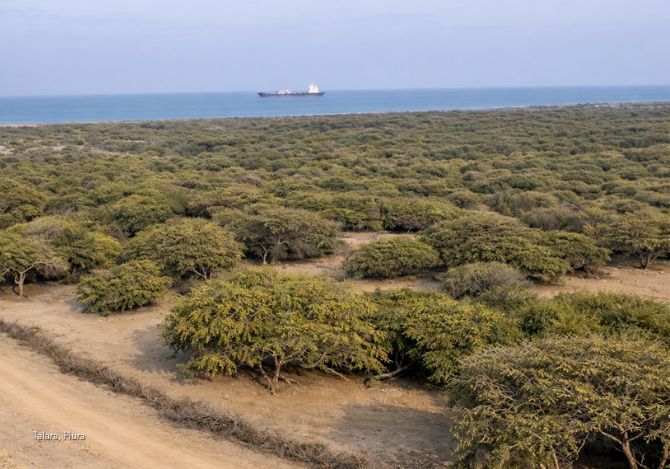
dramatic meeting point of warm equatorial
currents and the nutrient-rich Humboldt
Current, where "the fishing is fantastic."
She evokes a coastline "waking up from a
long nap, well-rested enough to welcome a
new generation of travelers."
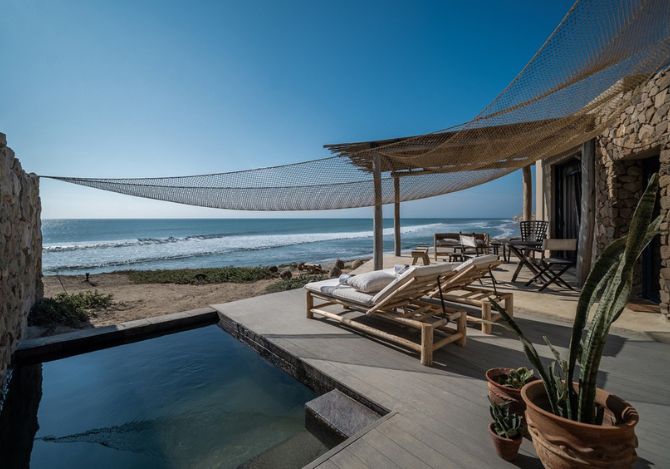
The review highlights the architectural
philosophy behind the 13-key property,
built from local materials (sand,
flattened bamboo, driftwood) "allowing it
to seamlessly camouflage into the sand
dunes and warped limestone that define
this coastline." The result, she writes,
is a stay that "embraces the effortless
appeal of the region, while providing a
frictionless, high-end experience."
She describes long, linen-clad lunches,
chilled white wine by the pool,
Mediterranean-Peruvian cuisine, plunge
pools facing the Pacific, and "very little
stress." Even if travelers "were to just
beeline in and out of the property," she
notes, "the experience at Inkaterra Cabo
Blanco is worth the trip."
Beyond design and gastronomy, Spurrell
underscores the brand's environmental
ethos: "To cover all of Inkaterra's eco
initiatives would require another article
entirely." Among them, she notes a
recently signed agreement with local
authorities granting Inkaterra
responsibility for the natural treatment
of wastewater from nearby towns—an
initiative that will support sustainable
agricultural practices in the region.
The article situates Inkaterra Cabo Blanco
within the brand's broader
portfolio—recognized globally for its
environmental leadership—and signals its
role as a destination-maker for
international travelers combining the
Amazon and Sacred Valley with Peru's
northern coast.
As Spurrell concludes, "There is something
special about the expansiveness of nature
here—the rolling desert meeting the
powerful Pacific… everything the light
touches is yours for the enjoying."
With this international spotlight,
Inkaterra Cabo Blanco not only
reintroduces a storied coastline to the
world—it marks the beginning of a new
chapter for regenerative tourism in Peru's
north.