INKATERRA LA CASONA
RECOGNIZED AS ONE OF THE WORLD’S BEST HOTELS
IN CONDÉ NAST TRAVELLER’S GOLD LIST 2026

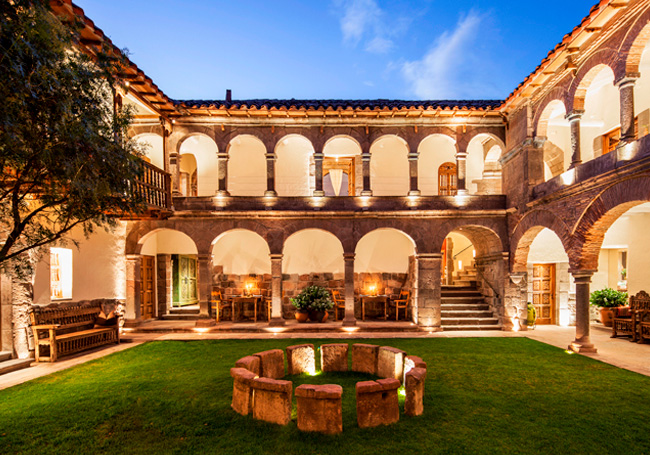
Inkaterra La Casona begins the new year on a high note, ranking on Condé Nast Traveller’s Gold List 2026 in the ‘Best Hotels and Resorts in Mexico, Central, and South America’ category. This prestigious recognition by the magazine’s editorial celebrates properties that define excellence through design, service, authenticity, and a deep sense of place.

José Koechlin von Stein, Founder and President of Inkaterra, welcomed the distinction as both a milestone and a tribute: “This recognition honors fifty years of Inkaterra as a pioneer of ecotourism and regenerative hospitality in Peru. It is also a heartfelt homage to Denise Koechlin, whose masterpiece is Inkaterra La Casona—an enduring expression of her vision, sensitivity, and reverence for history.” Denise’s work has long been acknowledged by the world’s leading travel authorities: in January 2011, Condé Nast Traveller (UK) highlighted Inkaterra La Casona with its coveted blue Editor’s Pick seal in the Gold List under Ambience and Design, while Travel + Leisure’s 2018 World’s Best Awards named it the Best City Hotel in Central and South America and the 4th Best Hotel in the World.

“The building that houses Inkaterra La Casona charts the history of Cusco: A top former training grounds for Incan nobility, it was occupied by Spanish conquistadors in the 16th century, then by Simón Bolivar, who led the liberation of Peru from Spanish rule in the 19th century,” Condé Nast Traveller’s global editors note. “And yet, when you step into the courtyard, where original stone archways and wooden balconies have been beautifully restored during a five-year process, you’ll find one of the city’s finest stays – with just 11 guest rooms that promise timeless luxuries of velvet armchairs, working fireplaces, and freestanding bathtubs adorned with bushels of fresh eucalyptus leaves.”

Inkaterra La Casona is also a recipient of two Michelin Keys, part of a total of five Michelin Keys awarded to Inkaterra properties in Peru—an extraordinary distinction from the Michelin Guide recognizing hotels for hospitality, authenticity, and sustainability. “Receiving five Michelin Keys confirms that hospitality can be not only an expression of beauty, quality, and service, but also an act of conservation,” adds Koechlin. Recognized by the United Nations as the world’s first Climate Positive hotel brand, Inkaterra operates across Peru’s most emblematic landscapes, integrating scientific research, conservation, and community development.

More than a luxury hotel, Inkaterra La Casona stands as an emblematic case of historic heritage conservation through hospitality—where the preservation of a living monument becomes a refined, intimate experience. Its latest recognition on the Gold List 2026 reaffirms Inkaterra’s legacy as an ambassador of sustainable luxury, uniting history, culture, and nature at the heart of Peruvian hospitality.

TWO NEW RECOGNITIONS FOR THE ORGANIC TEA OF INKATERRA MACHU PICCHU PUEBLO HOTEL AT
TEAS OF THE WORLD 2025

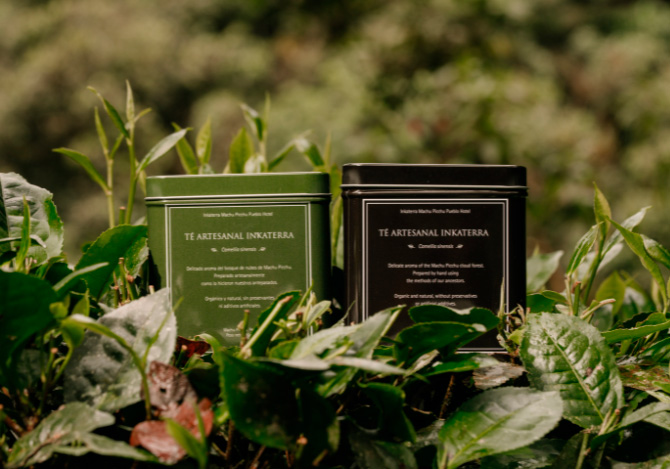
The organic tea cultivated at Inkaterra Machu Picchu Pueblo Hotel has once again been recognized at the prestigious Teas of the World Awards, a competition organized by AVPA France that celebrates gastronomic excellence among the world’s most remarkable teas. This year, the black tea received the Bronze Medal, while the green tea was awarded the Gourmet Medal, bringing the total to five medals granted to teas produced at Inkaterra’s property in the Andean cloud forest of Machu Picchu.

These distinctions add to awards received in previous editions, including a Gold Medal (Gourmet Or) and two Silver Medals, further consolidating Inkaterra as a benchmark in the revival of a centuries-old cultivation tradition and in the production of teas of outstanding gastronomic value.

For Inkaterra chairman José Koechlin, this achievement reflects a holistic vision that combines conservation, science, scenic beauty, and sensory experience: “The medals awarded to our teas celebrate the holistic approach we have championed since we began ecotourism in 1975. Our organic teas revive an ancestral tradition, contribute to the conservation of the cloud forest, and symbolize one of the many pleasures we offer our travelers.”

Inkaterra Machu Picchu Pueblo Hotel is today a pioneering example of regenerative tourism worldwide, recognized for its ecological restoration of the cloud forest, for hosting 315 recorded bird species, 372 orchid species in their natural habitat—the largest collection in the world according to the American Orchid Society—and for its recent Michelin Key, a distinction that celebrates authenticity, excellence in hospitality, and environmental commitment.

When José Koechlin acquired the property in 1976, it was home to an old tea plantation. Nearly a century old, the Camellia sinensis crops at Inkaterra Machu Picchu Pueblo Hotel grow under the shade of native trees in the Andean cloud forest at 2,050 meters above sea level. The most tender shoots are processed by Inkaterra in an artisanal, sensory manner and in accordance with organic practices, producing a black tea defined by notes of chocolate, honey, dried fruits, and wood. Meanwhile, the green tea’s aroma offers herbal textures characteristic of a terroir nestled among mountains, veiled in mist and nourished by spring water.

Organized by AVPA, the Teas of the World Awards celebrate teas of true gastronomic value and promote concepts of origin, climate, and soil, as well as principles of social equity and environmental protection that fully align with Inkaterra’s vision of sustainable development.

JOSÉ KOECHLIN REFLECTS ON
50 YEARS OF INKATERRA IN INTERVIEW
WITH RADIO FRANCE INTERNATIONALE

On the occasion of the Teas of the World Awards ceremony, José Koechlin, Founder and President of Inkaterra, took part in an interview with Radio France Internationale (RFI), hosted by journalist Jordi Batalle. The conversation offered a wide-ranging reflection on the resurgence of Peruvian tea, the origins and mission of Inkaterra, and a life devoted to conservation, culture, and regenerative tourism.

Koechlin reflected on the origins of Inkaterra, a mission to which he has devoted more than 50 years of his life. Founded in 1975, Inkaterra pioneered ecotourism in Peru by placing scientific research and biodiversity conservation at the heart of hospitality. Through extensive biological inventories across the Amazon rainforest, the Andean cloud forest, and the tropical ocean and dry forest of Northern Peru, Inkaterra helped demonstrate that tourism can be a powerful tool for ecosystem restoration and long-term conservation.

Beyond conservation and tea, Koechlin revisited a remarkable chapter of his cultural journey as a film producer, sharing memories of his collaboration with Werner Herzog on two landmark films of world cinema, Aguirre: The Wrath of God (1972) and Fitzcarraldo (1982). Filmed in the Peruvian Amazon, both works stand as powerful testaments to the complex relationship between human ambition, nature, and myth—territory that continues to inform Koechlin’s vision today.

Together, the interview painted a singular portrait of José Koechlin as a champion of Peruvian tea, a pioneer of regenerative tourism, a promoter of biodiversity science, and a cultural figure whose life’s work bridges nature, heritage, and artistic creation. Click here to watch the full interview.

‘MACHU PICCHU AND THE GOLDEN EMPIRES OF PERU’ OPENS IN TOKYO TO GREAT PUBLIC ACCLAIM

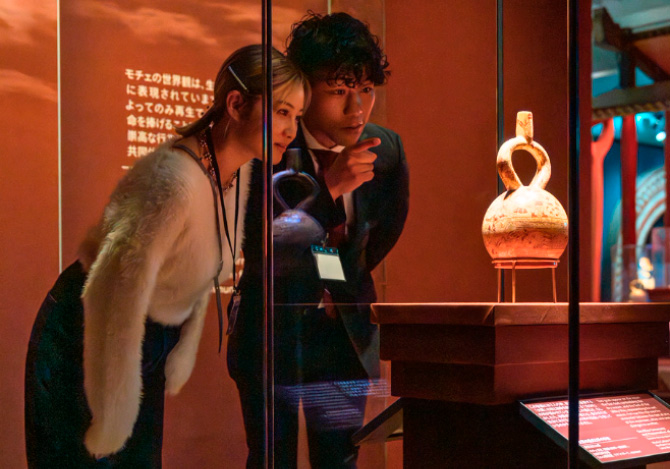
Celebrating the legacy of Peru’s ancient civilizations through an extraordinary journey across 3,000 years of Andean art and worldview, Machu Picchu and the Golden Empires of Peru officially opened in Tokyo to great public success, welcoming visitors since November 22 at the Mori Arts Center Gallery (Roppongi Hills).

The largest exhibition to showcase Peru’s cultural legacy and extraordinary biodiversity, this landmark production is presented by Inkaterra Asociación in alliance with Neon Global, creators of Ramses and the Gold of the Pharaohs and Pompeii: The Exhibition.

Arriving in Asia for the first time after acclaimed presentations in Florida, Paris, Milan, and Sydney, the exhibition invites audiences in Tokyo to experience one of the most ambitious showcases of Peru’s cultural heritage ever assembled. Visitors encounter more than 130 remarkable artifacts from Lima’s Larco Museum, including exquisite jewelry, funerary objects from royal tombs, and one of the most impressive collections of gold objects ever to tour internationally. Together, these masterpieces illuminate the artistic brilliance and cultural sophistication of ancient Peru, offering insights into daily life, spiritual beliefs, and the extraordinary achievements of its millenary civilizations.

With its debut at the Mori Arts Center Gallery, the exhibition strengthens the cultural bridge between Peru and Japan while offering a contemporary reading of Machu Picchu’s universal value—not only as an icon of human ingenuity and the sacred Andean landscape, but also as a source of inspiration for new generations of researchers, artists, and travelers.

“Machu Picchu and the Golden Empires of Peru is the most innovative way to invite travelers from around the world to explore our many wonders,” says exhibition partner José Koechlin. In an interview with The New York Times, Andrew James Hamilton, curator at the Art Institute of Chicago, praised the exhibition as “the crème de la crème… the kind of works that museums around the world are constantly trying to borrow.”

If you find yourself in Tokyo, this is an unmissable opportunity to experience the depth, beauty, and enduring legacy of ancient Peru—on view through March 1.

December
most-liked Instagram Photo

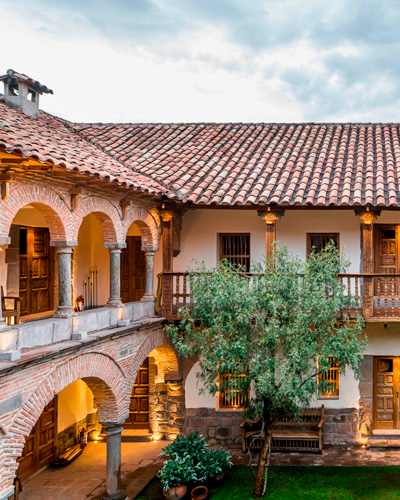
Silence finds its home in this Cusco manor house, shaped by Inca stone, carved wood, and warm traditional textures. A timeless setting where cultures and traditions meet across centuries.

@Inkaterrahotels

inkaterra.com